TikTok hooks are the first one to three seconds of a video: the spoken line, on-screen text or visual action that decides whether someone keeps watching. For a product brand, the best TikTok hooks are not the ones with the most views. They are the ones that end in comments like "where can I buy this". Which hook does that depends on the format it opens. Below is a hook library sorted by format, with notes from Postspace's comment data on which openers pull buyer intent.
What a TikTok hook is, and what it has to do when you sell something
A hook can be a line you say, text on screen, a sound or a movement. The strong ones stack two: a line of text over a shot that already shows the product.
Most hook lists are written for reach. SendShort's list of TikTok hooks collects openers like "If you're seeing this…" and "Before you [action], watch this". Libraries such as Viral Hooks offer short visual clips (a surf slam, a snowball thrown at the camera) to put in front of a video. Both can stop a scroll. Neither tells the viewer what you sell.
For a product brand the hook has a second job: filtering. A hook that stops everyone fills the comments with jokes. A hook that stops people who have the problem fills them with questions about where to buy.
Postspace's library shows the gap. A stitch-format video sat at 3,927,330 views (captured October 19, 2026), yet across 122 scored comments for that format, one showed buyer intent. Read every hook below as part of a format: the opener makes a promise, and the beats after it pay it off with the product on screen.
Hooks that pull buyer comments, sorted by format
The numbers come from Postspace's library as of October 19, 2026. Each format has a scored sample of comments tagged for buyer intent ("where can I buy this", "link?", shipping questions, "is this free"), which feeds its comment-signal score.
Postspace also keeps a second, larger comment tally per format. We lead with the scored sample and give the larger tally next to it, because for some formats the two differ a lot. Samples are small, so treat them as direction, not law.
Three reasons, fast cuts
Pattern: "Three reasons I'm not shutting up about [product]."
- "Three reasons this [product] lives in my bag now"
- "Reason three is why I bought a second one"
- "Three things [product] fixed that I didn't expect"
23 of 115 scored comments showed buyer intent, and the larger tally is identical. Examples include "Where can I buy this" and "Donde puedo comprarlo??". Objections ran at 23% of comments, slightly above "wants to buy" at 20%, so save the strongest reason for third and make it the one that answers the most common objection.
Two of the biggest product videos in the library use this format: an outlet extender at 8,899,894 views and a mattress cover at 5,392,293 views (both captured October 19, 2026).
Unboxing, first reaction
Pattern: "Okay I wasn't expecting [product] to look like this."
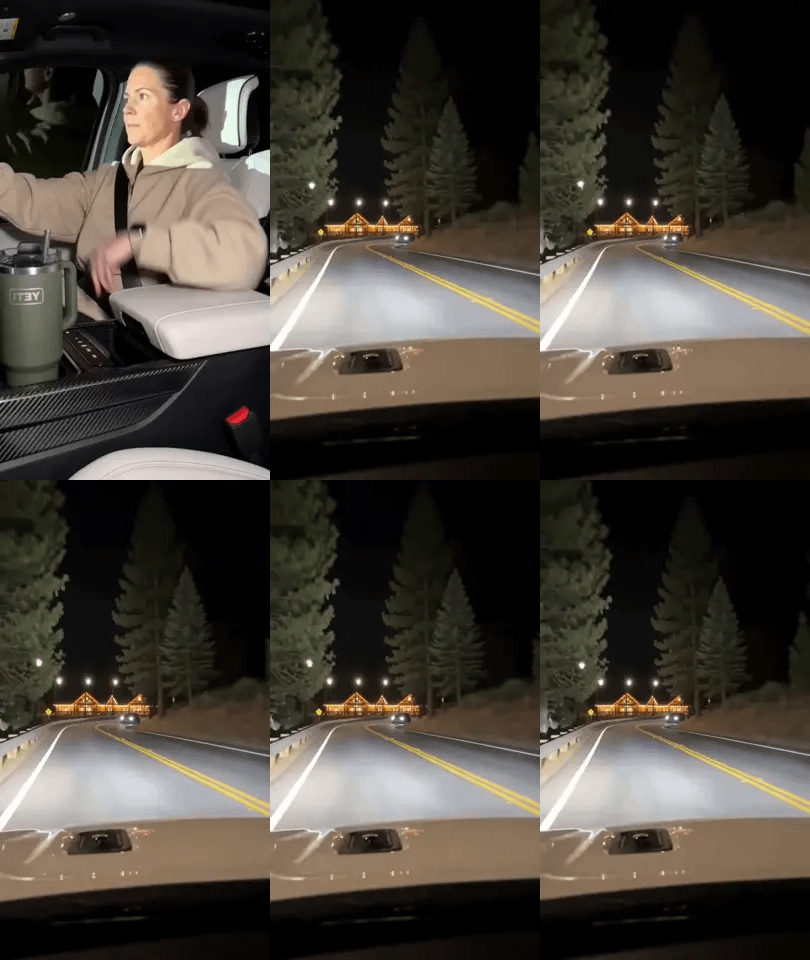
This format has the highest comment-signal score in the library, 100. 57 of 170 scored comments showed intent (58 of 171 in the larger tally), and "wants to buy" was the top theme at 34%.
Read the comments before copying it. Two of the four example comments in that sample ask about getting free samples, such as "How do you get free samples?". Our read is that some of this intent comes from creators rather than shoppers, but that is a judgment from a handful of examples, so check your own category.
Say the hook over the sound of the seal breaking, and keep one honest flaw in. The format depends on the reaction reading as unpaid, and the flaw does that work.
Packing orders POV
Pattern: "Packing your order at [time], [n] orders to go."
13 of 75 scored comments showed intent. The larger tally runs much higher at 34 of 131, the widest gap between the two counts in the library. Several examples are shipping questions, such as "haces envíos a México?", so have a shipping answer ready to paste before you post.
The hook works as on-screen text over hands and a stack of orders. Say the variant out loud in beat two.
Day-in-the-life
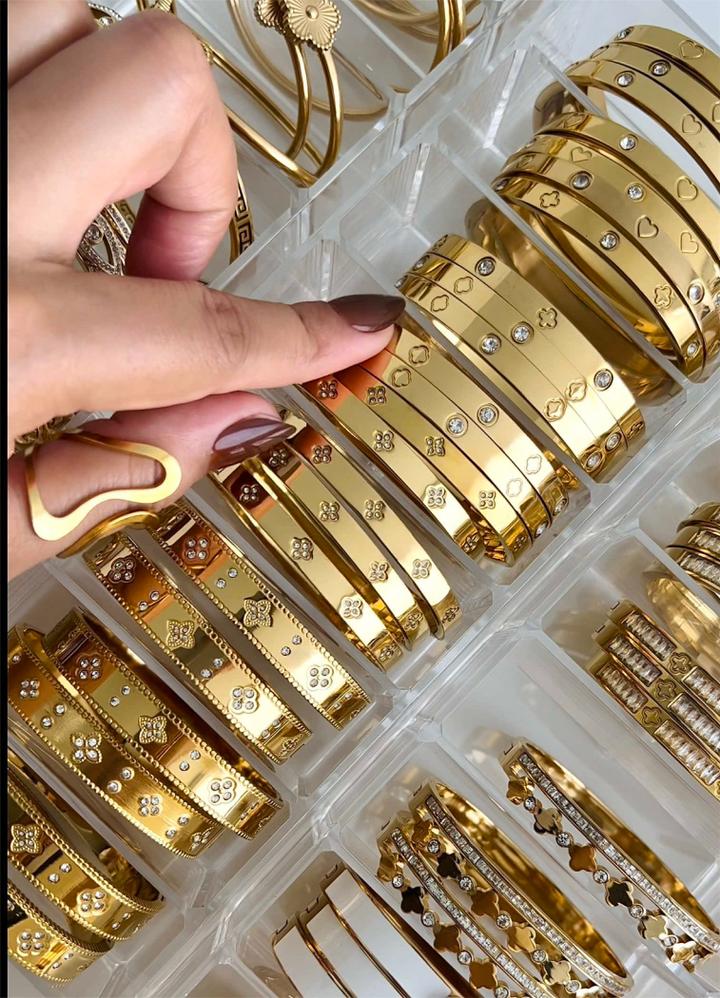
Pattern: "Day [n] of using [product] instead of [old habit]."
15 of 64 scored comments showed intent (19 of 101 in the larger tally), with "wants to buy" at 23% and "already uses it" at 22%. The day number promises a series. It suits consumables, wearables and apps: anything that shows up several times in a normal day.
Screen-record aha (apps)
Pattern: "I didn't know an app could do this."
7 of 39 scored comments showed intent (16 of 71 in the larger tally). Product questions were 26% and "wants to buy" 18%. The hook is voiced over the exact tap that triggers the result, so claim and proof land in the same second. More app openers are in our guide to TikTok formats that drive app downloads.
How to choose and test a hook by hand
You can do this without a tool. Budget an afternoon per product.
1. Pick the format before the hook
Decide what you can actually film: a demo, orders going out, a reaction, a list. The hook comes from the format. Our breakdown of TikTok formats that sell products covers which ones fit which product types.
2. Pull ten videos in your category that use it
Search your category plus the format ("packing orders", "three reasons"). Include smaller accounts. A modest video with a pile of "link?" comments tells you more than a viral one full of jokes.
3. Count buyer comments, not total comments
Tally "where", "link", "how much", "do you ship to", "what app is this". Skip praise, jokes and creator questions about samples. It's the same method as reading TikTok comments for content strategy, applied to openers.
4. Copy the structure, not the words
Keep the skeleton of the winning hook and swap in your product's noun and its most specific problem. "Three reasons I'm not shutting up about this" becomes "Three reasons I'm not shutting up about this lint roller".
5. Write three variants and test them
Run them through the hook strength analyzer, then film one body with three openers. Compare buyer comments per video, not views.
Postspace runs steps 2 to 4 for you. It reads your store or app site, finds the formats whose comments show buyer intent in your category, and writes the hook, beats, on-screen text, caption and CTA.
The full scoreboard: hook patterns vs buyer comments
All twelve formats in Postspace's library as of October 19, 2026, ordered by comment-signal score. Sample sizes differ, so read each count with its denominator.
| Format | Hook pattern | Signal score | Buyer intent, scored sample | Larger tally | Leading comment theme |
|---|---|---|---|---|---|
| Unboxing, first reaction | Okay I wasn't expecting [product] to look like this | 100 | 57 of 170 | 58 of 171 | wants to buy, 34% |
| Founder answers the comment | Replying to @[user]: [their objection] | 92 | 3 of 26 | 3 of 26 | "respect", "ordered" |
| Day-in-the-life | Day [n] of using [product] instead of [old habit] | 78 | 15 of 64 | 19 of 101 | praise, 25% |
| Three reasons, fast cuts | Three reasons I'm not shutting up about [product] | 67 | 23 of 115 | 23 of 115 | praise, 25% |
| Screen-record aha | I didn't know an app could do this | 60 | 7 of 39 | 16 of 71 | praise, 31% |
| Packing orders POV | Packing your order at [time], [n] orders to go | 58 | 13 of 75 | 34 of 131 | praise, 39% |
| Text-first silent scroll | [Bold claim], read this with sound off | 48 | 11 of 76 | 13 of 95 | praise, 53% |
| Problem → agitate → product | If your [thing] does [annoying problem], watch this | 28 | 3 of 36 | 9 of 48 | praise, 64% |
| ASMR process shot | No talking, just [satisfying process] | 11 | 2 of 58 | 9 of 88 | humor, 28% |
| Before / after split | Same person, same lighting, [n] days apart | 11 | 4 of 119 | 6 of 153 | objections, 30% |
| Green-screen receipt | Someone said [objection] so here's the actual receipt | 9 | 2 of 75 | 2 of 95 | objections, 36% |
| Stitch the wrong take | This is mostly right, but [correction] | 3 | 1 of 122 | 1 of 160 | humor, 35% |
The pattern is plain. Formats that show the product being handled (opened, packed, listed, used through a day) sit near the top. Formats built on argument or spectacle sit at the bottom, even when their videos get huge numbers. Founder replies are the outlier: a high score on a sample of 26.
Hooks that earn views, not buyers, and how to fix them
Stitch the wrong take
"This is mostly right, but [correction]" generates argument. Humor was 35% of comments and buyer intent was 1 in 122 scored comments. Use it for reach on an account that already sells, name the product once, and don't expect orders.
ASMR process shot
"No talking, just [satisfying process]" holds attention: the library's top ASMR video sat at 6,112,730 views (captured October 19, 2026). But "wants to buy" was 3% of comments, and 2 of 58 scored comments showed intent. Put the product name on screen in the final frame, and save the format for products where the process is the selling point.
Before / after split
"Same person, same lighting, [n] days apart" draws doubt. Objections were 30% of comments and 4 of 119 scored comments showed buyer intent. A typical one: "CAN SOMEONE TELL ME IF I ACTUALLY WORKS". The fix is in the hook: state the controls out loud, then give a realistic timeline in the last beat.
Green-screen receipt and founder answers the comment
Both work as second videos, not openers for cold viewers. The receipt format had objections at 36% and 2 of 75 scored buyer comments. Founder replies had 3 buyer comments in 26, but themes like "respect" and "ordered", and the second-highest comment-signal score in the library at 92.
The founder hook is someone else's words, so it only exists after a video has drawn a real objection. Answer it with specifics, not a defence.
Problem → agitate → product and text-first silent scroll
Problem-agitate hooks pull mostly praise (64%), with "wants to buy" at 8% and comments like "I need this". Text-first hooks scored 11 of 76, but the example comments read like viewers planning to try the video's advice ("I am going to try this"), not buy a product. That is a judgment from four examples. Same lesson as unboxing: check what the intent is for.
Worked example: a three reasons hook for a glass meal-prep set
Product: a five-piece glass meal-prep container set with locking lids, sold through a TikTok Shop listing and a DTC store.
Hook (spoken, set already in hand): "Three reasons I'm not shutting up about these glass containers."
On-screen text at 0:00: "3 reasons I bought a second set"
- 0:00 Hook to camera, stack of containers in hand, lids clicked shut.
- 0:03 Reason one: flip a full container of soup upside down over the sink. Nothing drips. Hard cut on "drips". Text: "1. Upside down. Dry."
- 0:08 Reason two, new angle: same dish from fridge shelf to oven rack. Text: "2. Fridge to oven, one dish"
- 0:13 Reason three answers the obvious objection, "glass is heavy and breaks". Show it sliding into a work bag and a lid that still seals after repeated dishwasher runs, only if that's true for your set. Text: "3. Fits my bag. Lids still seal."
- 0:17 Price and where, one line, said casually. Text: "Set of 5, linked"
Caption: "Reason 3 is why I stopped buying plastic ones. Set of five is linked."
CTA: "Tap the product link. It's the set of five with the grey lids."
Same product, other formats: "If your lunch leaks in your bag, watch this" (problem → agitate → product) or "Packing your meal-prep sets at 7am, [n] orders to go" (packing orders POV). Film the body once and test the openers against each other. If you sell through your own store as well as a shop listing, see how Postspace builds briefs for ecommerce brands.
Using these hooks on Reels and Shorts
TikTok is where buyer comments are easiest to read, which makes it the place to research hooks. The finished video can go to Instagram Reels and YouTube Shorts as is.
Two adjustments help. Put the hook in on-screen text as well as speaking it, so it still lands for anyone watching muted. Keep the CTA platform-neutral ("linked", "in my bio") rather than pointing at a TikTok Shop tab that doesn't exist elsewhere. More openers, sorted by format, are in the format library.