UGC ads are paid ads built from creator-style videos: a real person on a phone camera showing, using or talking about a product, run through TikTok, Meta or YouTube ads instead of posted only as organic content. Brands use them because they look like posts, not commercials. This guide covers how to brief creators for UGC ads, which formats pull buying comments, how to test hooks without wasting budget, and how to decide between human creators and AI UGC.
What counts as a UGC ad
A UGC ad has two parts: the video and the distribution. The video is filmed in a native, lo-fi style by a creator you hired, or a customer who gave you rights. The distribution is paid: you put ad spend behind it so it reaches people who don't follow you.
There are two common ways to run one:
- From your brand account: the creator sends you the file, and you upload it as a normal ad with your brand name on it.
- From the creator's account: the creator posts it, and you boost their post. On TikTok this is Spark Ads, which the TikTok Ads Help Center describes as a way to "publish ads using organic posts made by other creators (with their authorization)" (TikTok Ads Help Center). The views, comments and follows go to the original post.
Running from the creator's account usually looks more native, because the ad carries a person's handle instead of a brand's. It also requires the creator's authorization and a clear agreement on how long you can use it.
Human creators vs AI UGC
Most of what ranks for "UGC ads" right now is AI tools that generate avatar videos. They are fast and cheap per video. Whether they fit depends on what the ad has to prove.
| Human creator UGC | AI UGC | |
|---|---|---|
| Cost per video | Higher | Lower |
| Turnaround | Days | Minutes |
| Real product in hand | Yes | Usually composited or absent |
| Can show texture, fit, results | Yes | Weak |
| Can answer a real comment | Yes, with a reply video | No real person behind it |
| Best for | Physical products, proof-heavy claims, Spark Ads | Testing scripts and hooks quickly, app explainers |
A practical split: use AI UGC to test which script and hook direction gets attention, then pay human creators to film the winners with the real product. A buyer deciding on a $40 serum wants to see the texture on a real hand.
Pick the format before you brief anyone
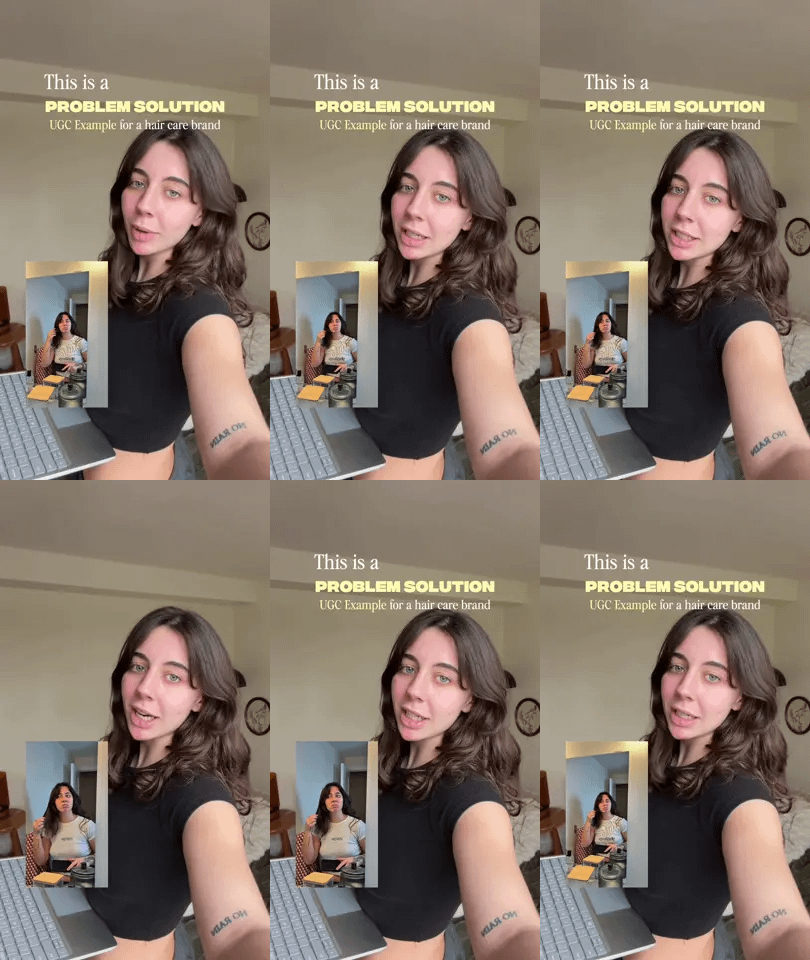
The format is the structure of the video: problem to fix, screen recording, packing orders, unboxing. It matters more than the creator's follower count, because it decides whether the comments fill with "cute" or with "where do I get this?"
Postspace tracks comments on short-form product videos and tags the ones that show buying intent. Across the published, verified videos in our library on November 2, 2026 (3,307 comments in total), the gap between formats was wide:
| Format | Comments | Buying-intent comments | Rate |
|---|---|---|---|
| Packing Orders POV | 107 | 5 | 4.7% |
| Three Reasons, Fast Cuts | 194 | 7 | 3.6% |
| Unboxing First Reaction | 222 | 4 | 1.8% |
| ASMR Process Shot | 1,640 | 15 | 0.9% |
| Before / After Split | 153 | 0 | 0% |
| Stitch The Wrong Take | 399 | 0 | 0% |
It's one sample and some formats have only a few hundred comments, so read it as direction. The pattern still holds up: the formats that pulled the most comments were mostly entertainment, and the ones that got people asking how to buy showed the product and what it does. Our guide to what UGC is and how brands use it has the full table across all twelve formats.
How to brief a UGC ad
A UGC ad brief is shorter than most brands think. One page, six parts:
1. The format and why
Name the format and the one thing it needs to show. "Problem → Agitate → Product: show the drain clogging, then fixed in one take."
2. Three hooks, written by you
The first two seconds decide whether the ad gets watched. Write three hook options and ask the creator to film all three as separate openings over the same body. That gives you three ads from one shoot. Our TikTok hooks sorted by format is a good starting list.
3. Beats, not a script
Four to six beats with rough timestamps. Let the creator say each beat in their own words. Read scripts sound like ads, and ads get skipped.
4. The objection to answer
Every product has one question that stops the sale: does it fit, does it last, is it a subscription, is it worth the price. Put the answer on screen.
5. One CTA
One action, said like a person would say it: "it's linked" or "it's called [app name]." Not a list.
6. Rights and disclosure
State how long you can run the video as an ad, and on which platforms. If the creator is paid or gets free product, the FTC expects the relationship to be disclosed in the video itself, not only in the caption (FTC, Disclosures 101 for Social Media Influencers).
Worked example: a UGC ad for a budgeting app
Say you run a consumer budgeting app and want UGC ads that drive installs. A screen recording is the natural fit for an app, because the install decision happens when someone sees the interface. Our library doesn't yet have enough published app examples to rank it by buying comments, so treat this as a format to test against a three-reasons version.
Format: Screen-Record Aha
Hooks (film all three):
- "I didn't know an app could just tell me this."
- "This is where my $340 a month was going."
- "Stop doing your budget in a spreadsheet. Watch."
Beats:
- 0:00 Screen already open, mid-task, thumb moving. Hook as voiceover.
- 0:03 Tap the button that sorts a month of spending. Hold on the result for two full seconds.
- 0:07 Zoom in on one surprising category.
- 0:11 Second use: set a limit in one tap, faster cut.
- 0:15 App name said once out loud and shown on screen.
On-screen text: the hook in large type for the first two seconds, then "free to try" near the end only if that's true for your app.
Objection: "Does it connect to my bank safely?" One line on screen with your actual answer.
CTA: "It's called [app name]." Then end.
The dollar figure in the second hook should be the creator's real number from their own account, not one you make up. That's what keeps it believable.
How to test UGC ads without wasting budget
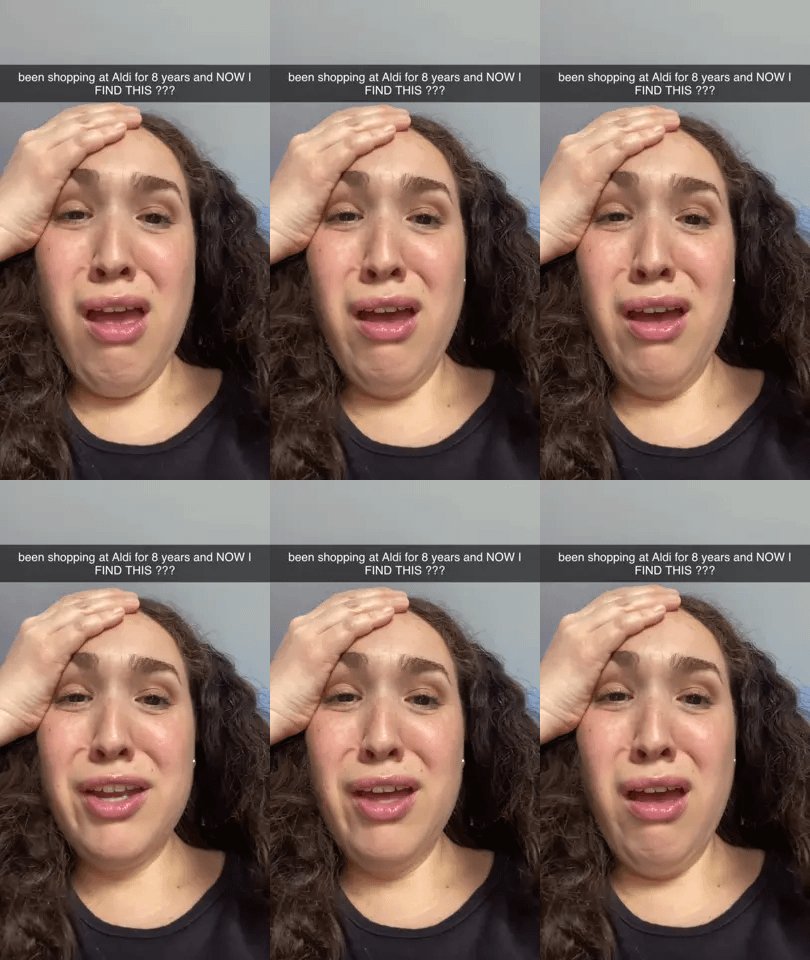
Change one thing at a time, and start with the hook, because it's the cheapest variable to change and the one that decides whether anything else gets seen.
- Round one, hooks: same body, three hooks, same audience and budget each. Keep the hook that holds viewers past the first few seconds and gets the most clicks.
- Round two, formats: take the winning hook direction to a second format. If problem-to-fix won, try a packing-orders or screen-record version.
- Round three, creators: brief two or three new creators on the winning hook and format. Different faces reach different buyers and slow down ad fatigue.
- Scale: move budget to the winner, and keep one new test running so you have a replacement when it fades.
For each ad, track three things: how many people get past the hook, cost per click or install, and buying-intent comments. The last one is the early signal. An ad full of "link?" comments usually converts before your attribution catches up.
When UGC ads don't work
Most failed UGC ads fail for one of three reasons:
- The format was chosen for views. Trend formats and stitches pull comments that aren't about buying.
- The product never does its job on screen. If the viewer can't see the result, they have nothing to want.
- The brief was "be authentic." Without a hook, beats and an objection to answer, creators default to a review, and reviews are easy to skip.
Fix the brief before you blame the creator or the platform. If you run creators for several brands, the same brief template works per client: see how agencies use Postspace, or browse every format with its beats.